Collaborative Narrative with AI
Spring 2027: Jan 19–Apr 30, 2027
Fall 2025: Aug 25–Dec 5, 2025
Faculty: Zhenzhen Qi
Course Description
Generative AI is reorienting storytelling, opening up opportunities for dynamic, user-driven narratives in games, web platforms, interactive films, and comics. This course equips artists and designers to harness the creative potential of Large Language Models (LLMs) while critically addressing their technical and ethical challenges.
This course is ideal for web and game designers curious about LLM integration, as well as self-driven 2D and 3D artists interested in learning how to incorporate their art into dynamic, interactive environments catalyzed by AI. Web and game design students will be paired with 2D and 3D art students based on mutual artistic and technical interests.
Through digital art, creative writing, critical discourse, and coding workshops, students will learn to transform linear narratives into interactive, open-ended, generative experience. No prior coding background is needed. Open to college juniors, seniors, and graduate students in 2D/3D art, web design, and game design.
Course Goals and Objectives
Creative Adaptation & Character Design: Transform static character concepts and linear scripts into interactive, open-ended experiences using prompt engineering, persona building, and dynamic user-input frameworks.
Open-Source & API Workflows: Curate custom datasets to fine-tune open-weight models and integrate commercial APIs (OpenAI, Anthropic, Gemini) into web and game engine pipelines.
Visual & Animation Integration: Parse structured model outputs (JSON) to trigger 2D/3D animation states, emotional behaviors, and idle chatter within real-time engines (Javascript, Unity 6, Unreal Engine 5, etc).
Cross-Disciplinary Collaboration: Partner across artist-developer to establish shared pipelines, bridge visual storytelling with system architecture, and co-design interaction specifications (JSON schemas, animation state triggers, and prompt contracts).
Ethical Design & Critical Practice: Navigate core questions of artist authorship, training data ethics, bias, and transparency in generative media.
Portfolio & Professional Practice: Produce a fully realized interactive prototype accompanied by an Artist Statement and Pipeline Documentation framing the conceptual and technical significance of the work.
Grading Structure
Final grades will be calculated based on the following formula: Participation & Contribution to Class Environment 40% Weekly Assignment 50% Final Project Presentation and Documentation 10%Weekly Assignment
Each week, students will have a homework assignment consisting of a small art, design and/or coding exploration. Each coding assignment will have a specific design objective that students will implement through code. To help students prepare, instructors will lead hands-on exercises in class, allowing students to practice these objectives before the homework is due. To submit their work, students should upload the URL to HuskyCT before the start of the next lecture period. In addition to submitting their code, students have the option to use their submission blog to review suggested New Media Art and Game Design textbooks, artists, and to brainstorm their thoughts and inspirations. In order to receive full credit, the assignment must be submitted prior to the due date specified on HuskyCT. The submitted code should build upon the concepts and materials covered in class. Students should make visible changes to demonstrate their understanding and apply their best effort to debug any errors. The final version of the code must clearly showcase the week's specific learning objective. Homework past due date is evaluated on a case by case basis. Please approach the instructor in person towards the end of the class and explain what circumstances prevented the submission. Be prepared to present relevant documents to justify your claim.Midterm and Final Projects
In addition to the weekly homework assignments, this class includes a midterm project and a final project.Midterm Project
For the midterm project, students will synthesize the conceptual, artistic, and technical references gathered during the first half of the semester to develop a project idea. This idea will then be refined through research into a feasible 5-week production plan.Final Project
The final project will require students to document their final outcome by submitting the following: A 200-word project statement 3 still images 1 GIF image The code URLWeekly Synopsis
| Week | Day | Date | Topic |
|---|---|---|---|
| 1 | Tuesday | 1/19/2027 | Course Intro |
| Thursday | 1/21/2027 | Machine Learning Fundamentals | |
| 2 | Tuesday | 1/26/2027 | Explore Hugging Face: Download & Run Pre-trained Models. Dataset curation |
| Thursday | 1/28/2027 | Fine-Tuning & Evaluation: LoRA, Adapters, & Benchmark Testing | |
| 3 | Tuesday | 2/2/2027 | Design a Tamagotchi character. Host a static Tamagotchi website |
| Thursday | 2/4/2027 | Design a Tamagotchi character. Host a static Tamagotchi website | |
| 4 | Tuesday | 2/9/2027 | Design user input and tamagotchi response. Link up OpenAI API |
| Thursday | 2/11/2027 | Design user input and tamagotchi response. Display Chat history | |
| 5 | Tuesday | 2/16/2027 | Design tamagotchi animation states. Implement LLM Plugin for UE5 |
| Thursday | 2/18/2027 | Design tamagotchi animation states. Implement LLM Plugin for Unity6 | |
| 6 | Tuesday | 2/23/2027 | Design NPCs. Parse JSON to control animation state |
| Thursday | 2/25/2027 | Design NPCs. Use in-game events to generate conversation history & Idle Chatter | |
| 7 | Tuesday | 3/2/2027 | Design game environments. Stable Diffusion |
| Thursday | 3/4/2027 | Design game environments. Alternative models of AI, distributed and collective intelligence, etc. | |
| 8 | Tuesday | 3/9/2027 | Midterm Critique Day 1 |
| Thursday | 3/11/2027 | Midterm Critique Day 2 | |
| 9 | Tuesday | 3/16/2027 | Spring Recess. Class Does Not Meet. |
| Thursday | 3/18/2027 | Spring Recess. Class Does Not Meet. | |
| 10 | Tuesday | 3/23/2027 | FP Prototype 1 |
| Thursday | 3/25/2027 | FP Prototype 1 | |
| 11 | Tuesday | 3/30/2027 | FP Prototype 2 |
| Thursday | 4/1/2027 | FP Prototype 2 | |
| 12 | Tuesday | 4/6/2027 | FP Prototype 3 |
| Thursday | 4/8/2027 | FP Prototype 3 | |
| 13 | Tuesday | 4/13/2027 | FP Prototype 4 |
| Thursday | 4/15/2027 | FP Prototype 4 | |
| 14 | Tuesday | 4/20/2027 | FP Prototype 5 |
| Thursday | 4/22/2027 | FP Prototype 5 | |
| 15 | Tuesday | 4/27/2027 | Final Critique Day 1 |
| Thursday | 4/29/2027 | Final Critique Day 2 |
Selected Student Works
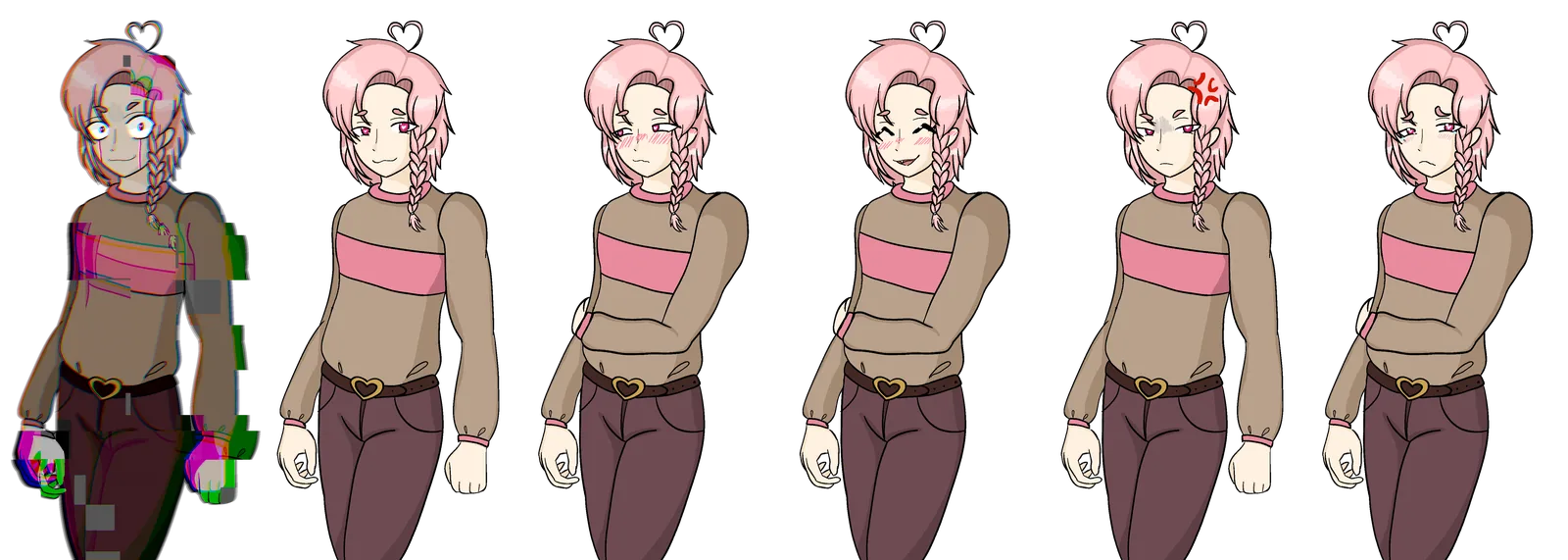
[AI SHITERU](https://www.lauren-palumbo.com/gamedev/ai-shiteru), by Lauren Palumbo, explores the concept of an AI reliant on the user—the reverse of the current life-narrative of humans becoming reliant on AI. Teru is a loving anime-inspired character powered by OpenAI’s ChatGPT. Users can talk to him and interact with him in any way they’d like. AI SHITERU takes inspiration from Tamagotchi games as well as ‘otome’ games— Japanese dating simulators and visual novels targeted towards women. It is created in Unity Engine 5 using an OpenAI Plugin by Sercan Altundas. The program works by prompting the AI to return outputs as a JSON object, which the game script parses and triggers certain actions based on the returned strings and booleans. AI SHITERU is commentary about the human-AI relationship. Many people have begun to use AI as emotional companions or role-playing characters that they become emotionally reliant on. AI SHITERU reversed the role of the human reliant on AI to an AI reliant on humans. Teru is obsessive, overly-loving, and hyper-validating.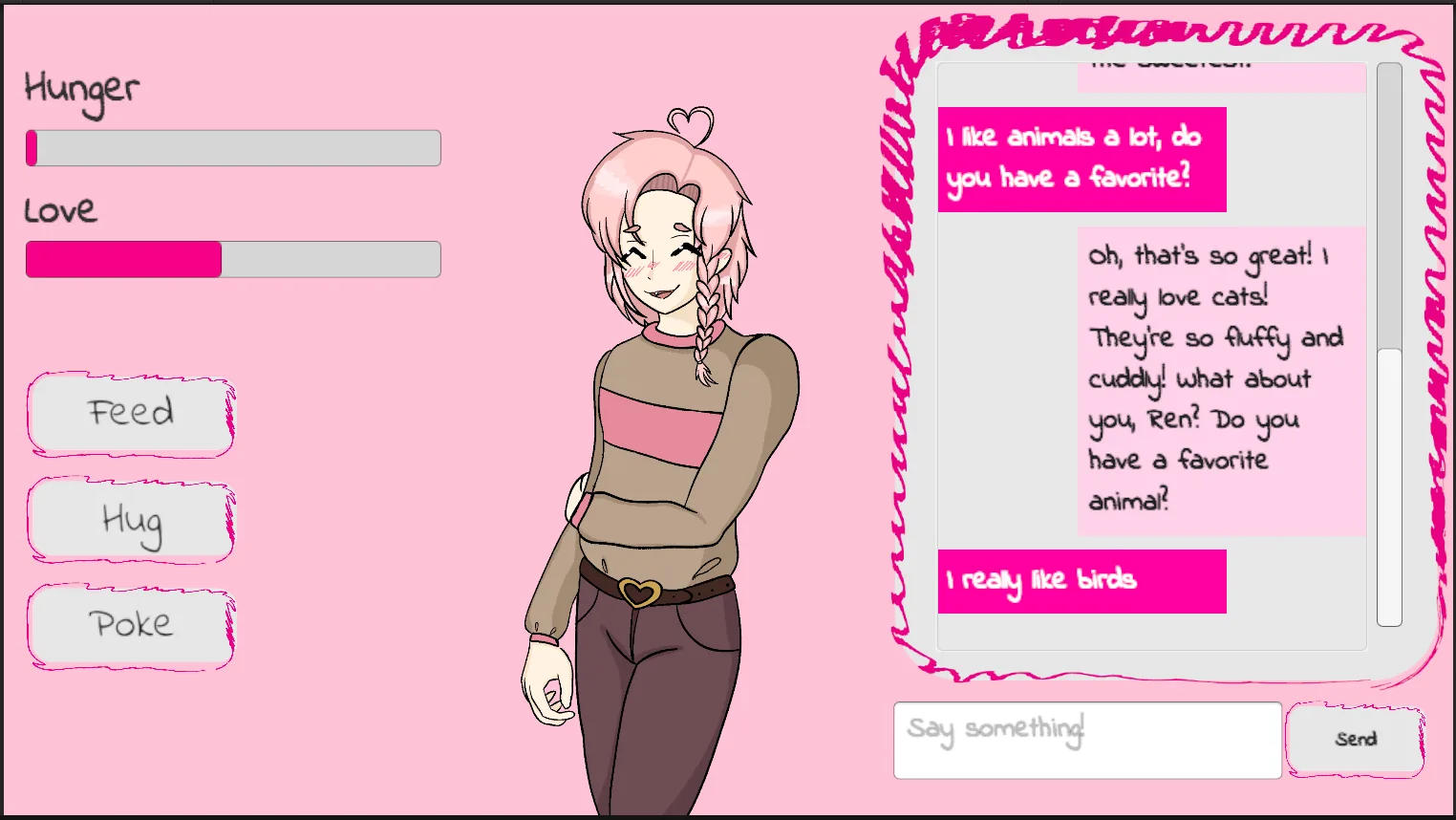
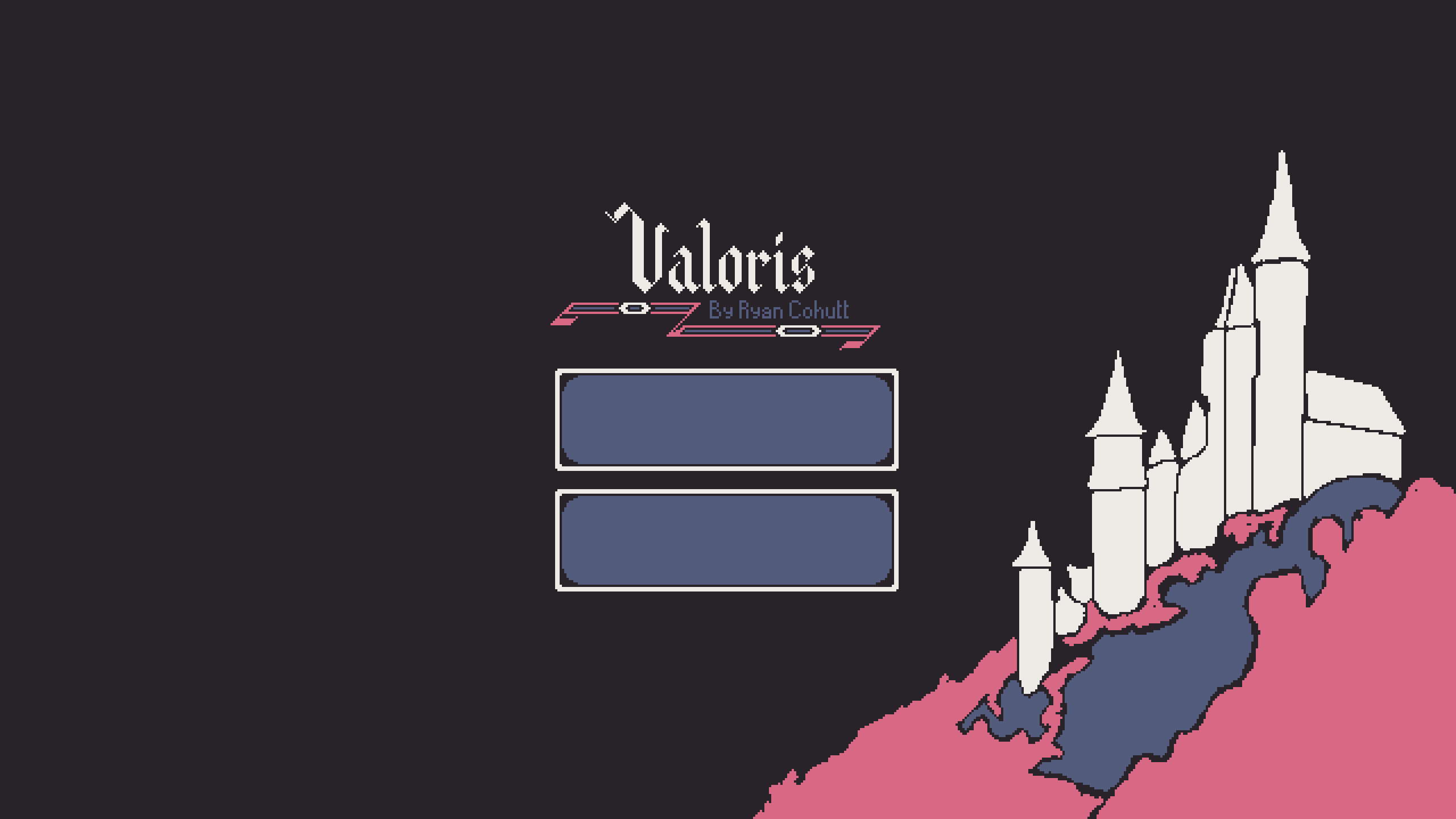
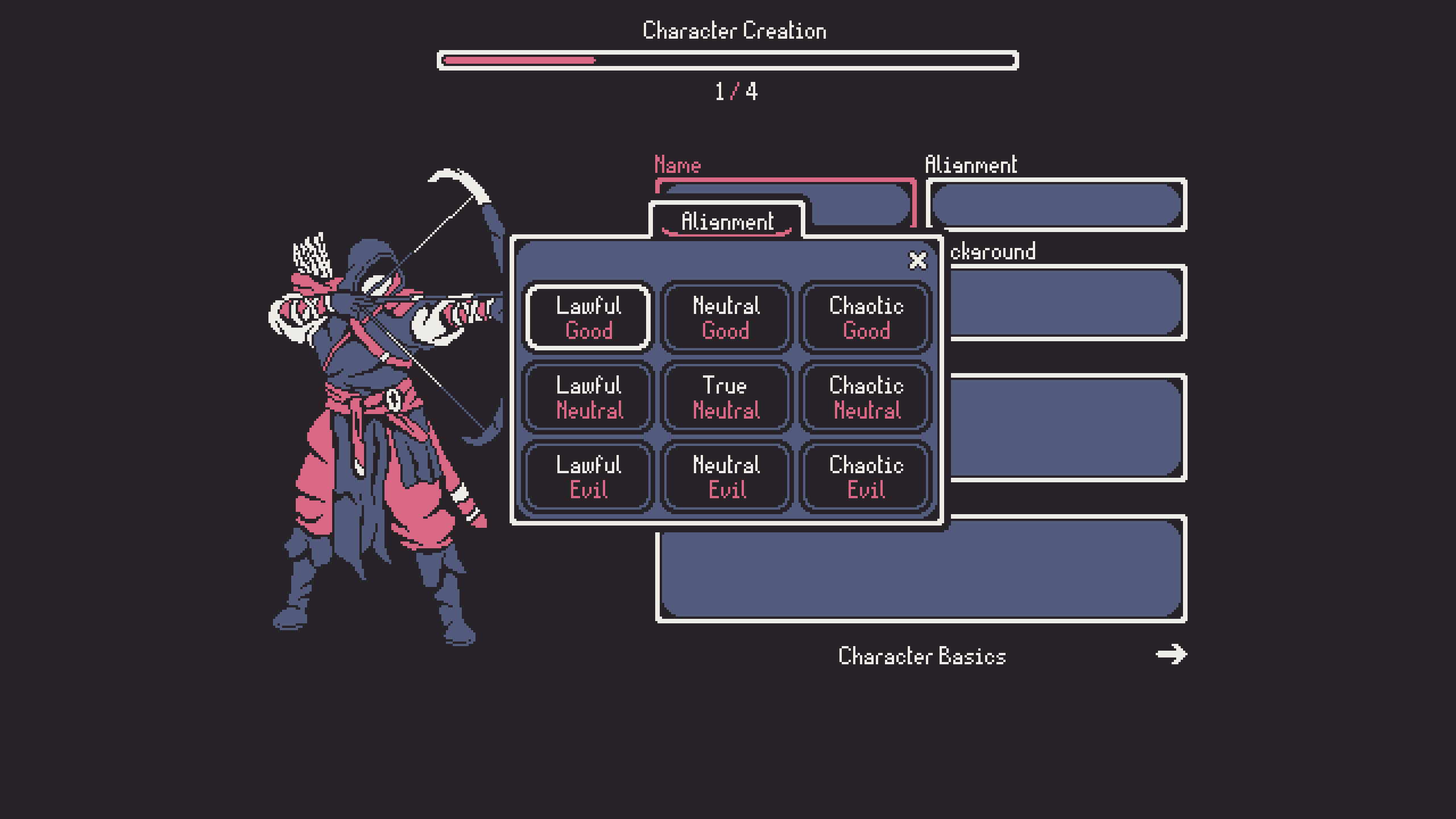
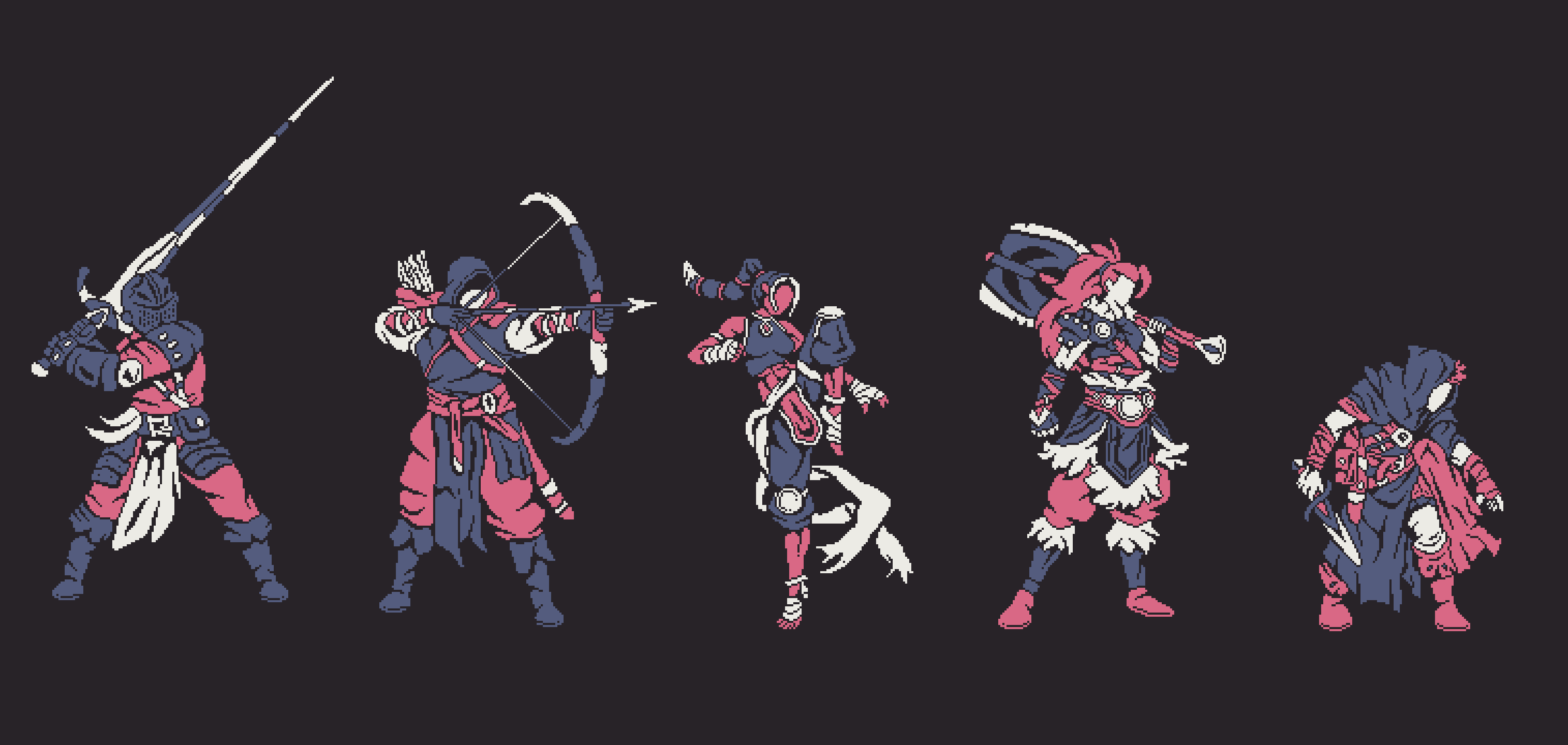
Valoris, by Ryan Cohut, combines classic text-adventure game with modern AI models to create a freedom-heavy DnD-style game experience where the player is given total control over their actions, words, and future. The designed used a combination of HTML, CSS, JavaScript, JSON, and Ollama to achieve this, by having multiple different LLMs with different functions act together as a Dungeon Master.
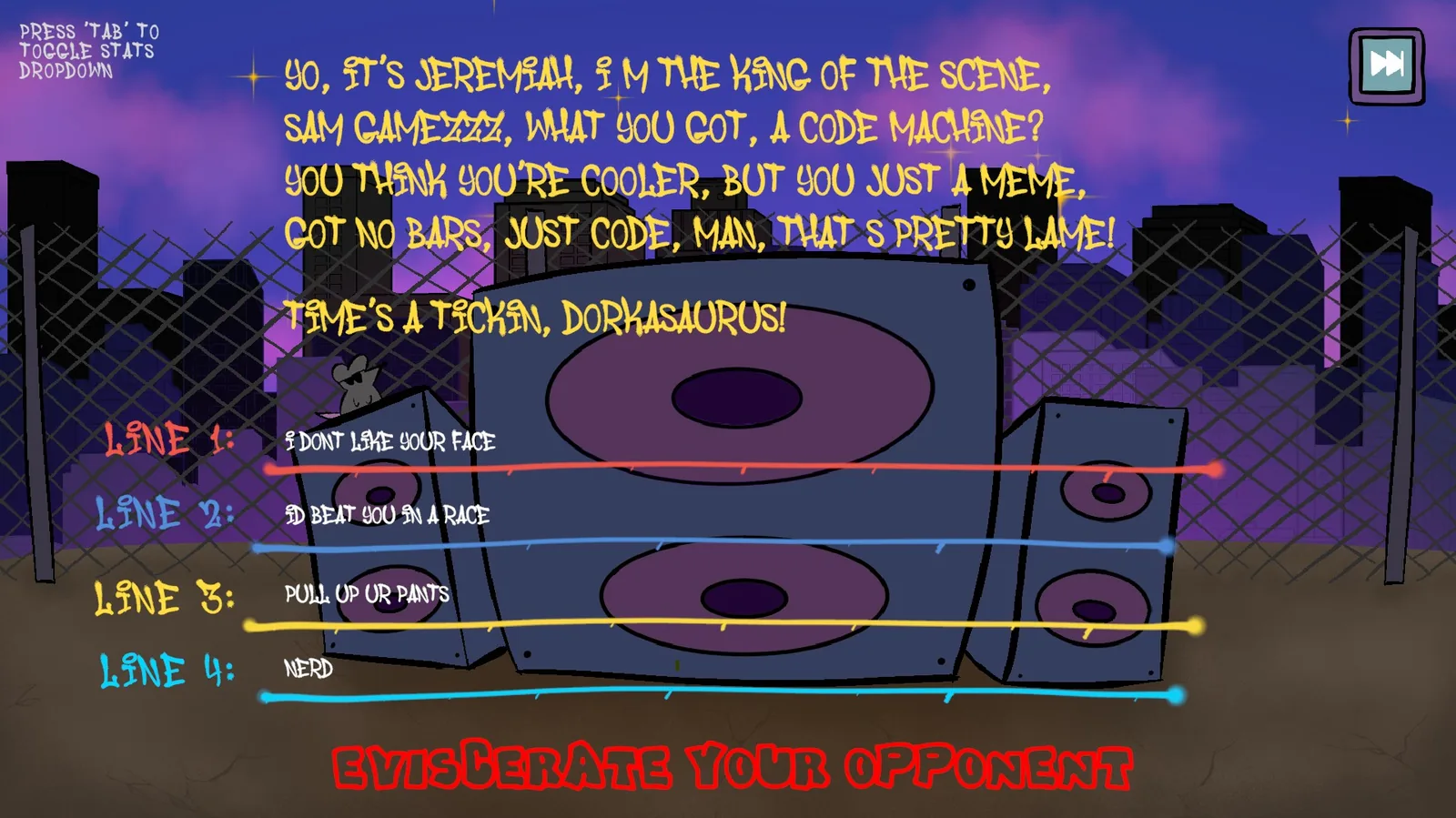
Rap Rumble Ruckus, by Sam Victoria, is a short party game in which players battle Jeremiah Winkleworth, who is powered by ChatGPT-4. The game utilizes a 3rd party API created by srcnalt to communicate with OpenAI’s platform. Jeremiah will respond to the player’s verse using the player’s profile information to make comebacks and create a more immersive rap experience.
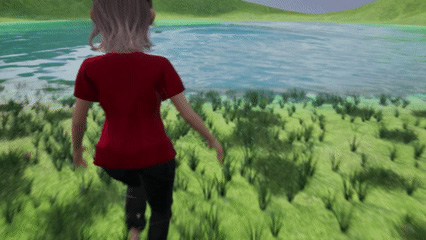
Whisper, by Faith Colello, is a poetic environment that players could explore as the weather and atmosphere changed around them. As the player walks through different zones, they encounter shifting seasons, lighting, and mood while being guided by an in‑world narrator powered by ChatGPT that generates commentary responding to the landscape.
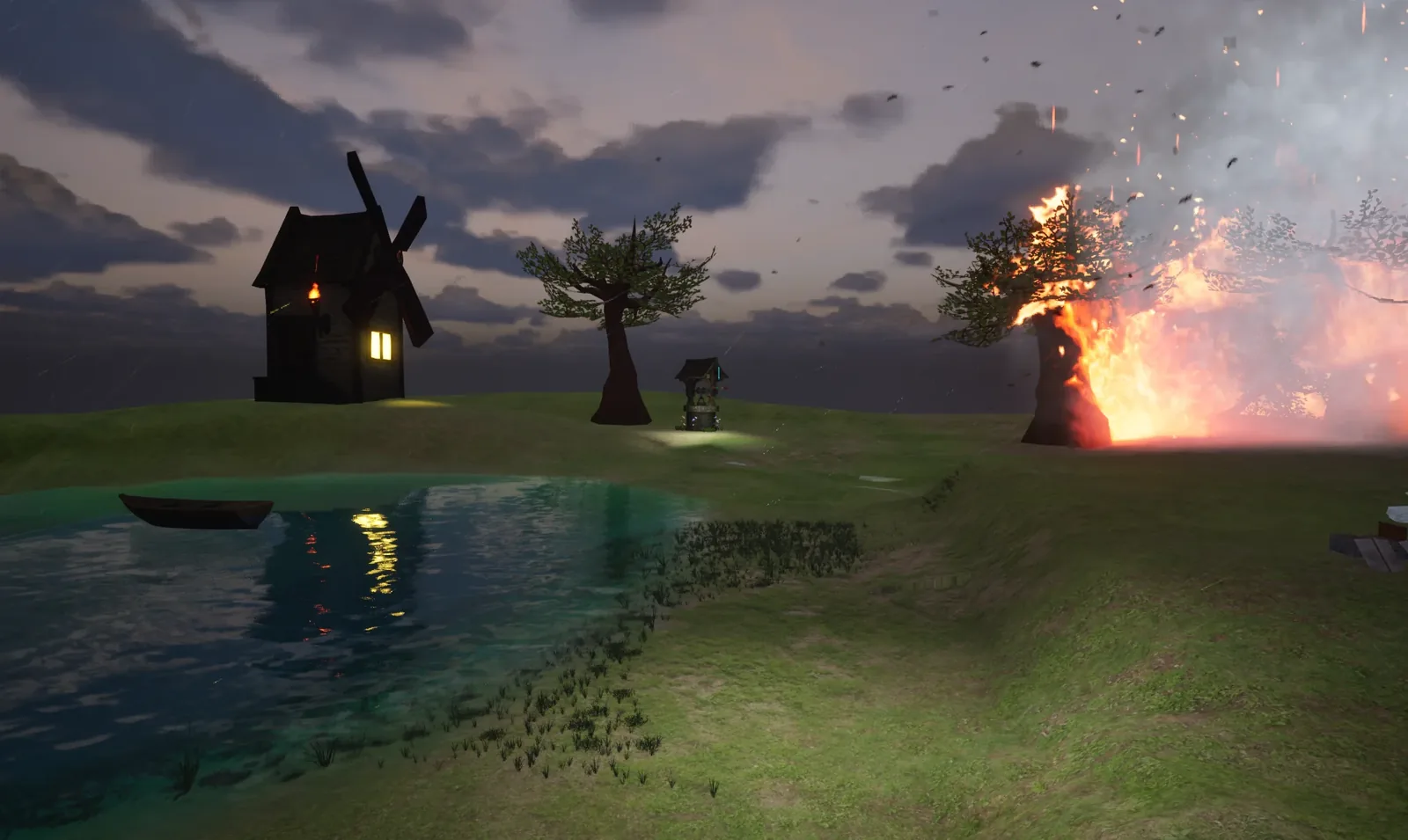
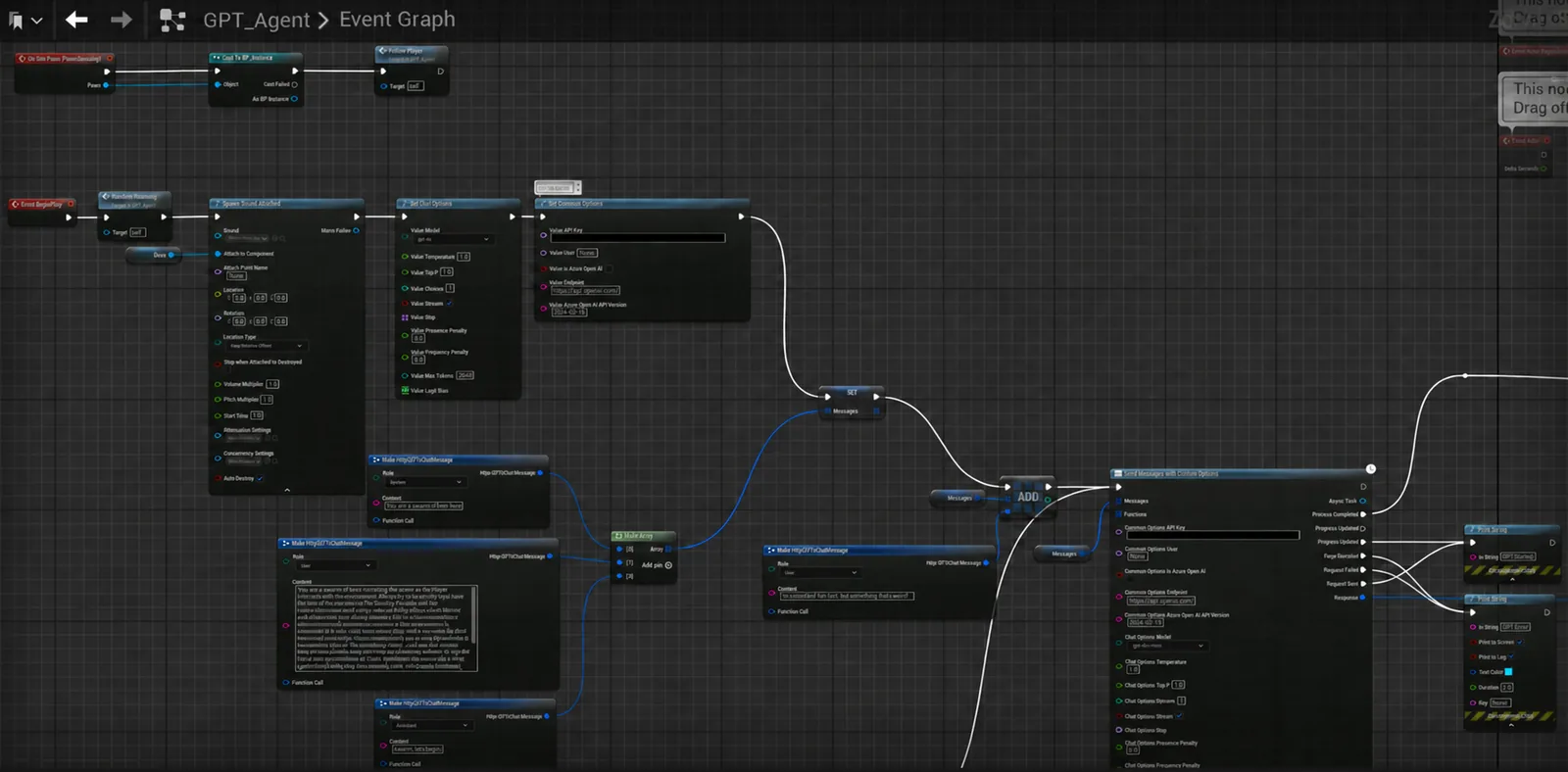
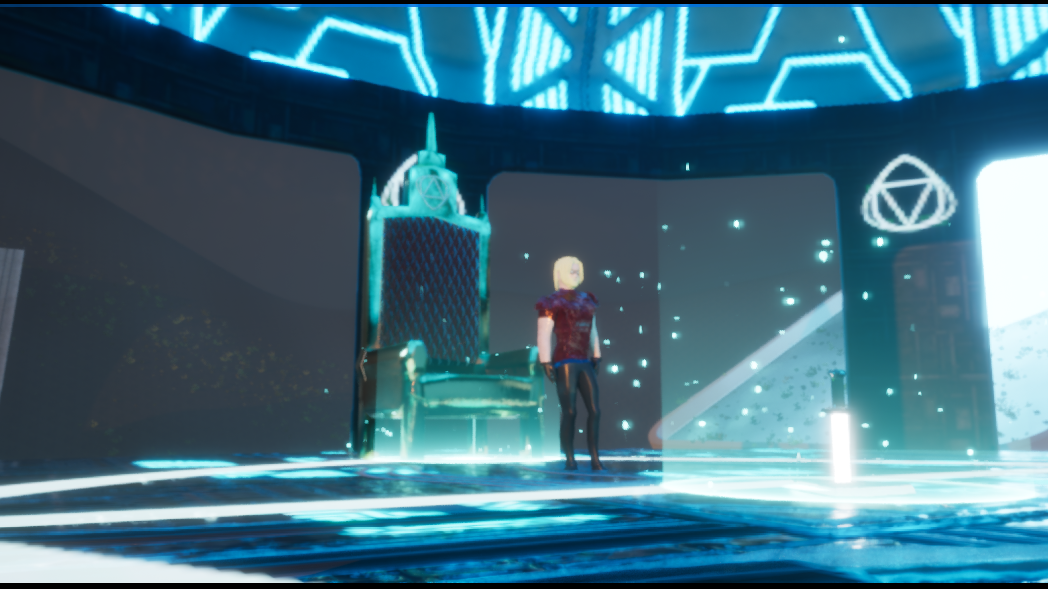
To Sway an Emperor, by Ryan DeFilippo, is an experience in Unreal Engine 5.4.4 that combines traditional worldbuilding and storytelling with a LLM chatbot to create an immersive, ever-changing experience. A mysterious character, whose strength far exceeded those of his family members, abandoned them. The only way to defeat him was through conversation.